Pull up three different sites this month and ask for Encino's median home price. One will tell you $1.4 million. Another will say $1.7 million. A third will put it above $3 million. All three are current. None of them are wrong. They are describing different neighborhoods that happen to share a name and a zip code prefix.
The gap is not a data error or a stale cache. It is Ventura Boulevard.
A Boulevard, Not Just A Commercial Strip
Ventura Boulevard runs through the middle of Encino carrying restaurants, a Whole Foods, and the daily traffic of a busy Valley corridor. It also happens to be the line separating two housing markets that behave nothing alike.
North of the boulevard sits the 91316 zip code: the flats, largely flat lots, a mix of condos, townhomes, and 1960s and 1970s ranch homes. This is the more accessible entry point into Encino, with pricing in one recent analysis running roughly $800,000 to $1.4 million, and another putting the range as low as $600,000 for condos up to $2 million for updated single-family homes. First-time buyers, investors, and move-up buyers from Van Nuys or Reseda concentrate here.
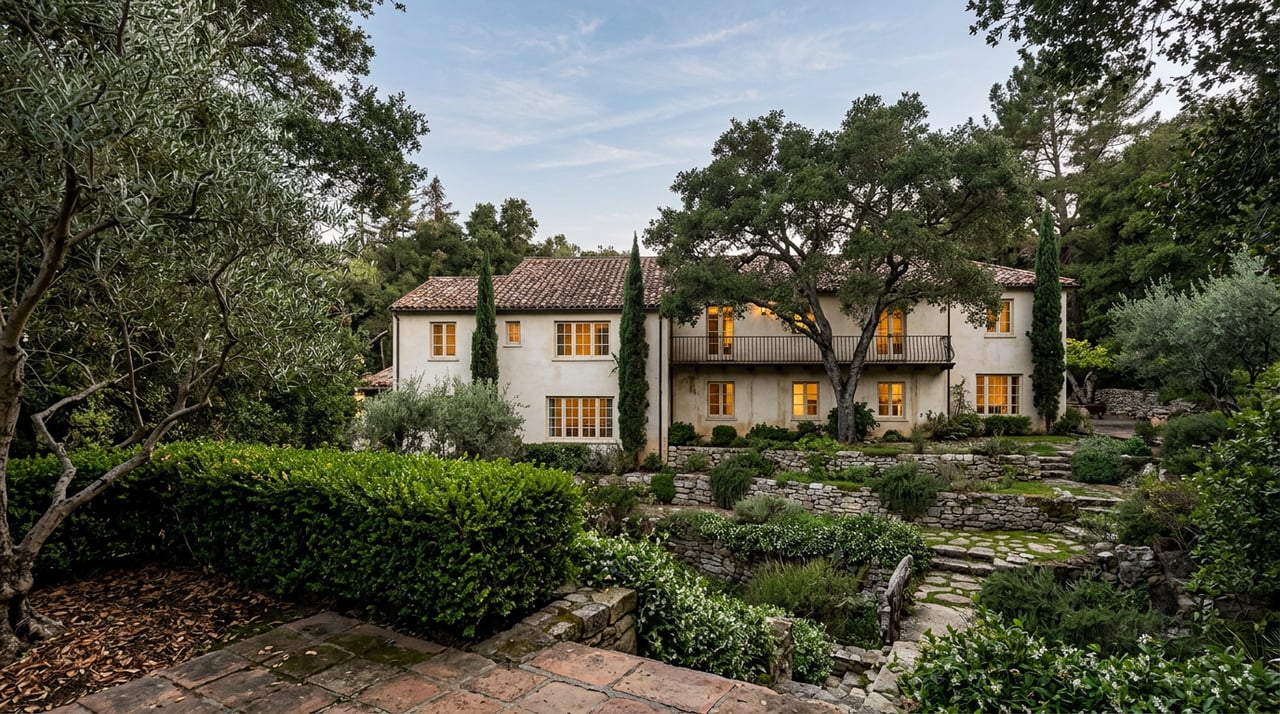
South of the boulevard, and climbing into the hills, sits 91436. This is Royal Oaks, Amestoy Estates, and the canyon-adjacent streets of Encino Hills, where lot sizes stretch from 8,000 square feet to well over an acre. Pricing here has been quoted anywhere from $1.5 million to $5 million by one source and $2.5 million to $8 million or more by another, with estate-level properties on streets like Rancho Encino Drive, Via De La Paz, and Louise Avenue routinely clearing eight figures.
| 91316 (North of Ventura, the flats) | 91436 (South of Ventura, the hills) | |
|---|---|---|
| Typical median | roughly $989,000 | roughly $2.28 million |
| Housing stock | condos, townhomes, 1960s-70s ranch homes | canyon lots, Royal Oaks and Amestoy Estates custom builds |
| Buyer pool | first-time buyers, investors, move-up buyers | move-up families, luxury buyers cross-shopping Calabasas and Brentwood |
| Structural constraint | flatter terrain allows more building and renovation | hillside lots are finite, limiting new inventory |
That $989,000 versus $2.28 million split, both figures reported as of early 2026, is the real story hiding underneath every blended Encino number you have seen. A citywide or zip-aggregated median takes both markets, averages them, and reports back a figure that does not describe either one accurately. It is the housing equivalent of averaging the temperature in a walk-in freezer and a sauna and calling the result room temperature.
The Premium A City-Wide Number Cannot See
Even within 91436, the differences compound. Homes zoned for Lanai Road Elementary, consistently rated among the highest-performing LAUSD schools, carry a documented premium over otherwise comparable properties just outside the boundary. Agents who track comparable sales across both sides of Ventura note gaps of $500,000 to $1 million between homes of similar square footage, driven almost entirely by which side of the boulevard the address falls on.
Part of what makes this premium durable rather than a temporary market quirk is geography. The flats north of Ventura can absorb new construction, teardown rebuilds, and density over time. The hillside lots south of the boulevard cannot expand to meet demand. A canyon lot in Royal Oaks or Amestoy Estates is a fixed quantity. When buyer interest in that inventory rises, there is no elastic supply response the way there is with a flat, subdividable lot in the 91316 corridor. That scarcity is the mechanism behind why Encino's luxury tier has stayed comparatively resilient even as broader Los Angeles pricing has cooled.
The neighborhood's history adds a footnote worth knowing if you are showing the area to out-of-town buyers. Encino takes its name from the Spanish word for oak, tracing back to the Tongva village of Siutcanga, "the place of the oaks," which once occupied the same land. The original 1849 ranch adobe still stands at Los Encinos State Historic Park on Moorpark Street, a five-acre preserve tucked a short drive from some of the same hillside streets now carrying eight-figure listings.
The Number That Looks Like A Contradiction
Here is where it gets genuinely strange if you are only reading headline statistics. Over the three months ending May 2026, one widely used listing platform reported Encino's median sale price at $1.7 million, up 6.9 percent from the same period a year earlier. The same dataset, same three months, reported the median sale price per square foot at $555, down 20.2 percent year over year.
Read quickly, that looks like a contradiction. Prices are rising and falling at the same time. They are not. What almost certainly happened is a shift in which homes sold, not a change in what any individual home is worth.
Price per square foot falls naturally as home size rises, because land and location dominate the price of a large property far more than the marginal square foot of interior space. A 6,000-square-foot hillside estate on a half-acre canyon lot will show a lower price per square foot than a 1,400-square-foot flats condo, even when the estate sells for four times the total price. If more of the transactions in this year's three-month window came from the larger, higher-total-price hills tier compared to last year's window, you would see exactly this pattern: median price up, price per square foot down, without a single home actually losing value.
That is the trap of reading any aggregate real estate statistic without asking what is inside it. The number is accurate. The story it seems to tell is not.
Reading Your Own Comp Set
If you are pricing a home to sell in Encino, or trying to figure out what your budget actually buys, the citywide median is close to useless on its own. The more useful exercise is narrower:
Confirm which zip code the property sits in, not just the neighborhood name. Confirm whether it falls inside the Lanai Road Elementary boundary if that matters to your buyer pool. Compare square footage against homes on the same side of Ventura Boulevard, in the same lot-size band, sold within the last three to six months. A hillside estate and a flats condo are not comparables just because both mailing addresses say Encino.
The broader market data backs this up in a way that is easy to miss. Across all of Encino, list prices were reported down roughly 12 percent year over year as of May 2026, with days on market stretching to a 53 to 80 day average. That reads like a softening market. At the same time, well-priced homes in either tier were still closing in 30 to 45 days, and the hillside luxury segment was described as remaining supply-constrained with a smaller but more qualified buyer pool. Both things are true simultaneously. The overpriced listings dragging the average up and the well-positioned homes moving quickly are not competing in the same market, even though they share a zip code.
Frequently Asked Questions
Is Encino currently a buyer's market or a seller's market? It depends on which tier you mean. The flats north of Ventura have more negotiating room, with list prices down and inventory less constrained. The hillside estate tier south of Ventura has held firmer, with limited comparable inventory keeping well-prepared listings moving faster despite the broader Valley slowdown.
Why does the Encino name itself seem to add value compared to nearby areas? Local market analyses consistently show Encino carrying a premium over neighboring Tarzana and Reseda even for comparable home sizes and ages. That premium reflects the school options, the established retail corridor along Ventura Boulevard, and freeway access via the 101 and 405, none of which shows up in a raw square-footage comparison.
Why do some Encino listings sit for 90 days while others close in three weeks? Both numbers are real and both belong to the same citywide average. Overpriced listings, particularly those still anchored to 2021 or 2022 comparables, tend to sit and take repeated price cuts. Homes priced accurately to current 2026 comps in their specific tier, whether flats or hills, are still finding buyers quickly.
Encino rewards the kind of pricing and positioning strategy that starts with the right comp set rather than a headline number. If you are trying to figure out what your Encino property is actually worth, or which side of the boulevard makes sense for what you are trying to buy, Jonathan Ruiz can walk through the comparable sales that apply to your specific street, not the citywide average. Request a private market consultation to get a read on where your home or your search actually sits.