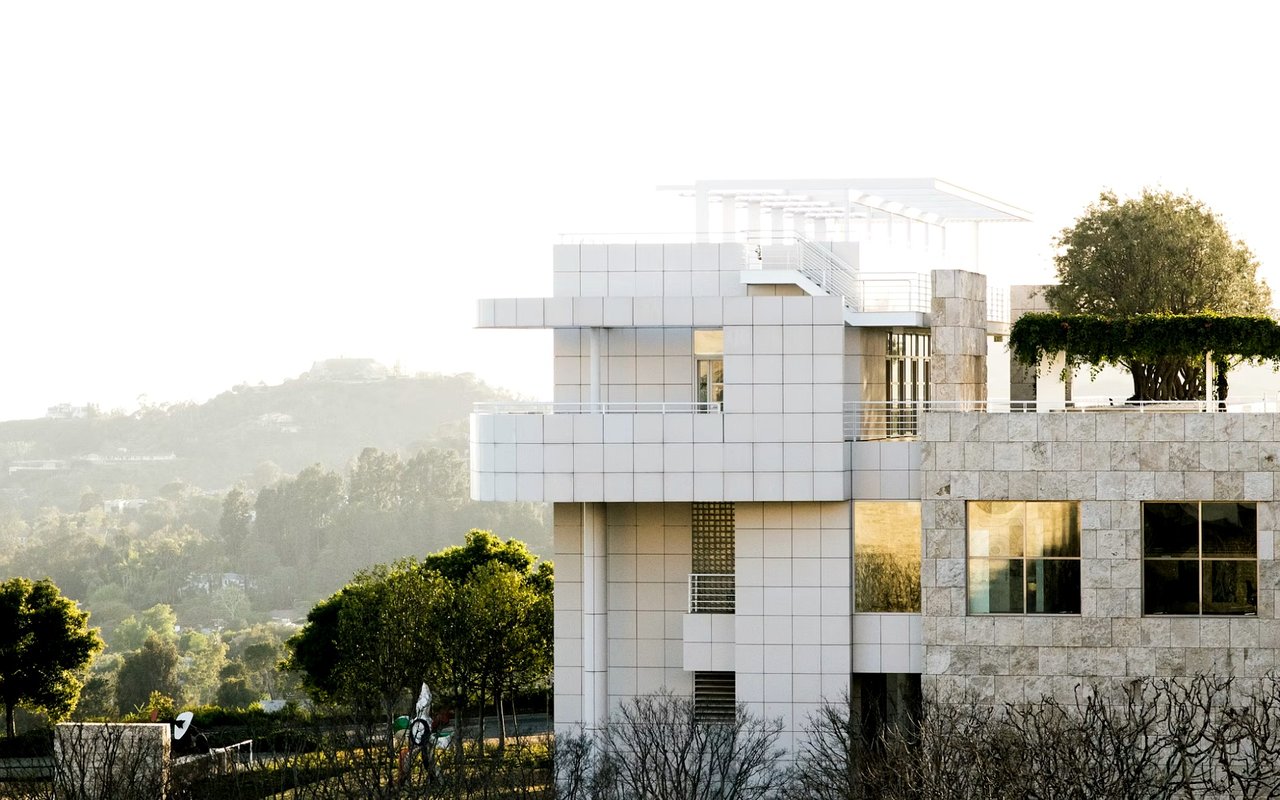
Drive down Bel-Air's stretch of Sepulveda after dark this week and you'll see the same thing residents have been seeing on and off since last summer: orange cones, a string of K-rail barriers, and a sign announcing that the Getty Center Drive ramp is closed. Caltrans crews are back on Interstate 405 through the Sepulveda Pass, working overnight from 9 p.m. to 6 a.m. Monday, September 21 through Friday, September 25, as part of a $143.7 million pavement rehabilitation project stretching from Van Nuys to Westwood. It's easy to read that sign and assume the museum on the hill is closed too. It isn't. The gap between what that closure looks like and what it actually restricts is the whole story of how Bel-Air runs this fall, and it's worth understanding before you cancel a plan you didn't need to cancel.
The Construction That Keeps Coming Back
This isn't a one-week disruption. The ramp work is tied to a Caltrans project that's been closing and reopening sections of the 405 through the Sepulveda Pass on a rolling schedule since last summer, and it isn't finished. Crews are still installing temporary concrete barriers and repaving lanes, with speed limits along the corridor reduced to 55 mph to protect workers, and the broader rehabilitation isn't expected to wrap until winter 2027. This week's specific closures shut up to four lanes of northbound 405 between Wilshire Boulevard and Skirball Center Drive, along with the Getty Center Drive off and on-ramps in both directions, plus the Sepulveda Boulevard and Ventura Boulevard ramps to the southbound freeway.
The pattern that matters for anyone living nearby: these are nightly closures, not all-day ones. The freeway itself and the ramp reopen every morning by 6 a.m.; the museum's schedule is separate from the overnight closures. If your plan involves an evening drive home after 9 p.m., that's the piece to route around. If it's a normal daytime visit, nothing about this week's schedule touches it.
What It Looks Like vs. What's Actually True
Bel-Air has a habit of looking more closed off than it is, and this month gives three clean examples of the same gap.
| What it looks like | What's actually true this month |
|---|---|
| The Getty Center Drive ramp is closed, so the museum must be too | The ramp closes overnight only, 9 p.m. to 6 a.m., through Friday, September 25. The museum keeps its regular daytime hours throughout. |
| Stone Canyon Reservoir is a walking loop hidden behind a fence | The reservoir itself stays closed for water security. The real vantage point is a short paved path at Stone Canyon Overlook, a quarter mile south on Mulholland Drive. |
| Bel-Air doesn't really have a restaurant scene | It has a small one on purpose, anchored by a single address that's been serving dinner under the same garden canopy since before most current residents were born. |
Each of those assumptions comes from judging the neighborhood by its gates rather than by what's actually reachable once you know where to look.
The Exhibition With an Actual Deadline
Here's where the timing gets specific enough to matter. The Getty Center is running two very different clocks right now, and only one of them should change your weekend plans.
An exhibition of work by the French Symbolist Odilon Redon, built largely from the museum's own collection of charcoal drawings, lithographs, and pastels, closes October 18, 2026. A companion rotation of European drawings on the theme of virtue and vice, spanning four centuries of moral allegory, closes the same day. Once October 18 passes, both shows are gone. That's four weeks from today, and it overlaps directly with a construction schedule that has already proven itself unpredictable over the past year.
Compare that to the museum's newer exhibition on manuscript-making, tracing the hand production of illuminated books, which stays on view through March 14, 2027. There's no reason to rush that one. The Redon show is the opposite case: it has a real deadline, it sits inside a construction window that keeps shifting, and residents who wait for a quieter week on the 405 risk running out of weeks entirely.
The Walk That Was Already There
If the overnight ramp closures make a drive feel like more trouble than it's worth, Bel-Air already has a walking answer that predates this year's construction entirely. The Getty View Trailhead doubles as a way to approach the museum on foot when the freeway ramp below it isn't cooperating, and it's one of a short list of named trails that make up the neighborhood's actual walking menu: Westridge-Canyonback Wilderness Park, the Mandeville Canyon Fire Road, and the Caballero Canyon Trail round out the list.
None of those trails is the reservoir loop that outsiders sometimes assume exists. Stone Canyon Reservoir sits fenced behind Mulholland Drive, supplying drinking water across West Los Angeles, Pacific Palisades, and the UCLA campus, and it has stayed that way since long before the current closures started. Part of the reason is straightforward water security. Part of it traces back to 1961, when a fire that started in this canyon burned 464 homes before it was contained, one of the most destructive brush fires in the city's history. A proposal has been on file for years to eventually open hiking trails through part of the site once the Upper Stone Canyon Reservoir is rebuilt as underground storage, but that project remains under discussion and unbuilt.
The honest answer for anyone who wants to see the water rather than just read about it is Stone Canyon Overlook, a short, fragrant, ADA-accessible path on the south side of Mulholland, dedicated to Anton Calleia, who served on the Santa Monica Mountains Conservancy through the early 1990s. On a clear day you can see the Palos Verdes Peninsula and Catalina Island from the same spot.
Where the Table Is Already Set
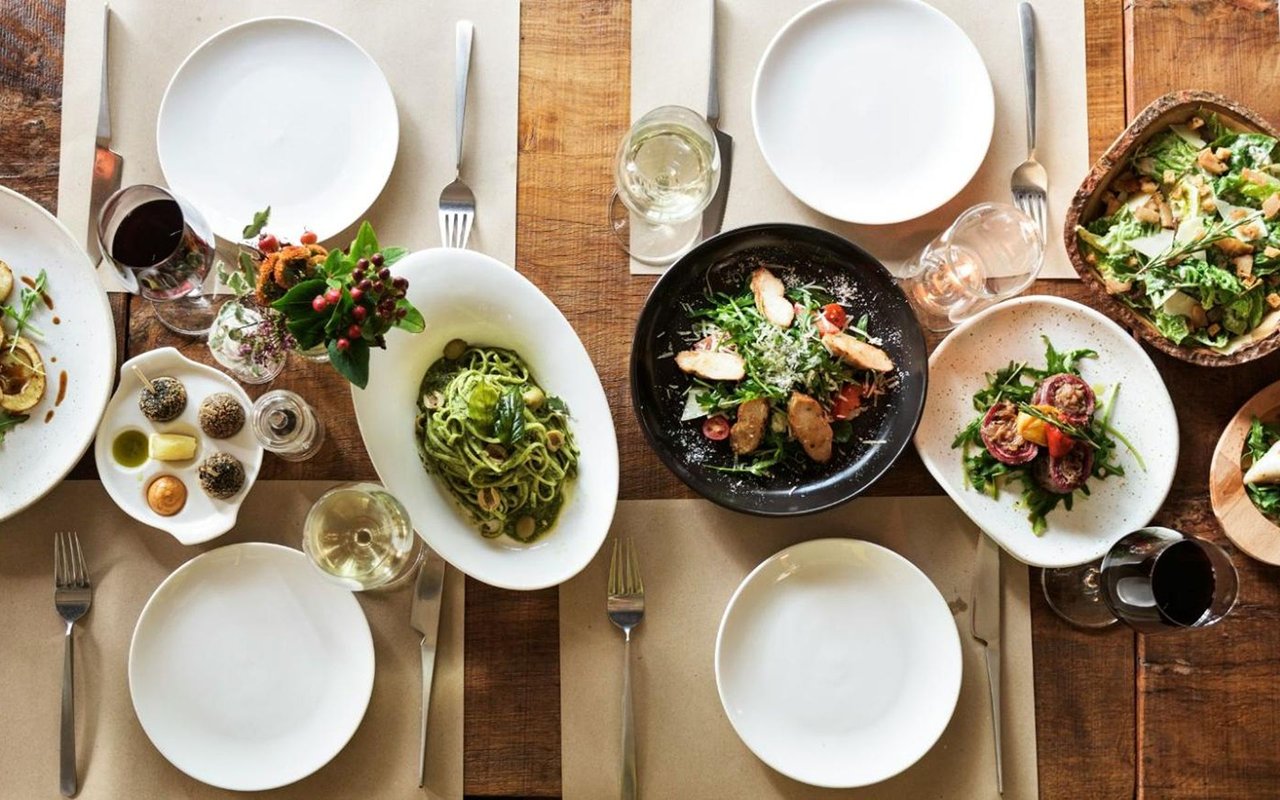
Bel-Air has never tried to compete with Beverly Hills on restaurant count, and that hasn't changed this year. What it has instead is one address that does the job the way the neighborhood actually wants it done. The Restaurant at Hotel Bel-Air sits at 701 Stone Canyon Road, opening onto a garden terrace over the property's Swan Lake, under mature trees that have watched several generations of Los Angeles pass through. The kitchen leans into seasonal California cooking with Mediterranean touches, the kind of menu built around what the farmers market had that week rather than what's trending. A pianist plays Sunday through Thursday evenings, and a jazz trio takes over Friday and Saturday nights.
It's the kind of place that doesn't need a second location or a delivery app footprint to matter to the people who already live here. That's consistent with everything else about how this neighborhood functions this fall: not larger, not busier, just precisely calibrated to what's already in walking or driving distance once you know the actual schedule.
The Read for This Week
None of this week's construction should keep you off the hill. The ramp closes at night, the museum runs its normal hours all day, and the show worth prioritizing has a hard end date that the manuscript exhibition doesn't share. If the evening timing doesn't work, the Getty View Trailhead gets you there on foot, and Stone Canyon Overlook gives you the water view the fenced reservoir never will. Bel-Air rewards residents who read past the sign on the freeway to what's actually running underneath it, and this particular week is as good a test of that as any.
For those who already call this canyon home and want a market read that pays the same kind of attention to detail, Jonathan Ruiz offers a private consultation grounded in exactly this level of local specificity, not a generic Westside overview.